Unsecured Loan Stress: What Happens to Your Credit Score When You Struggle With EMIs?
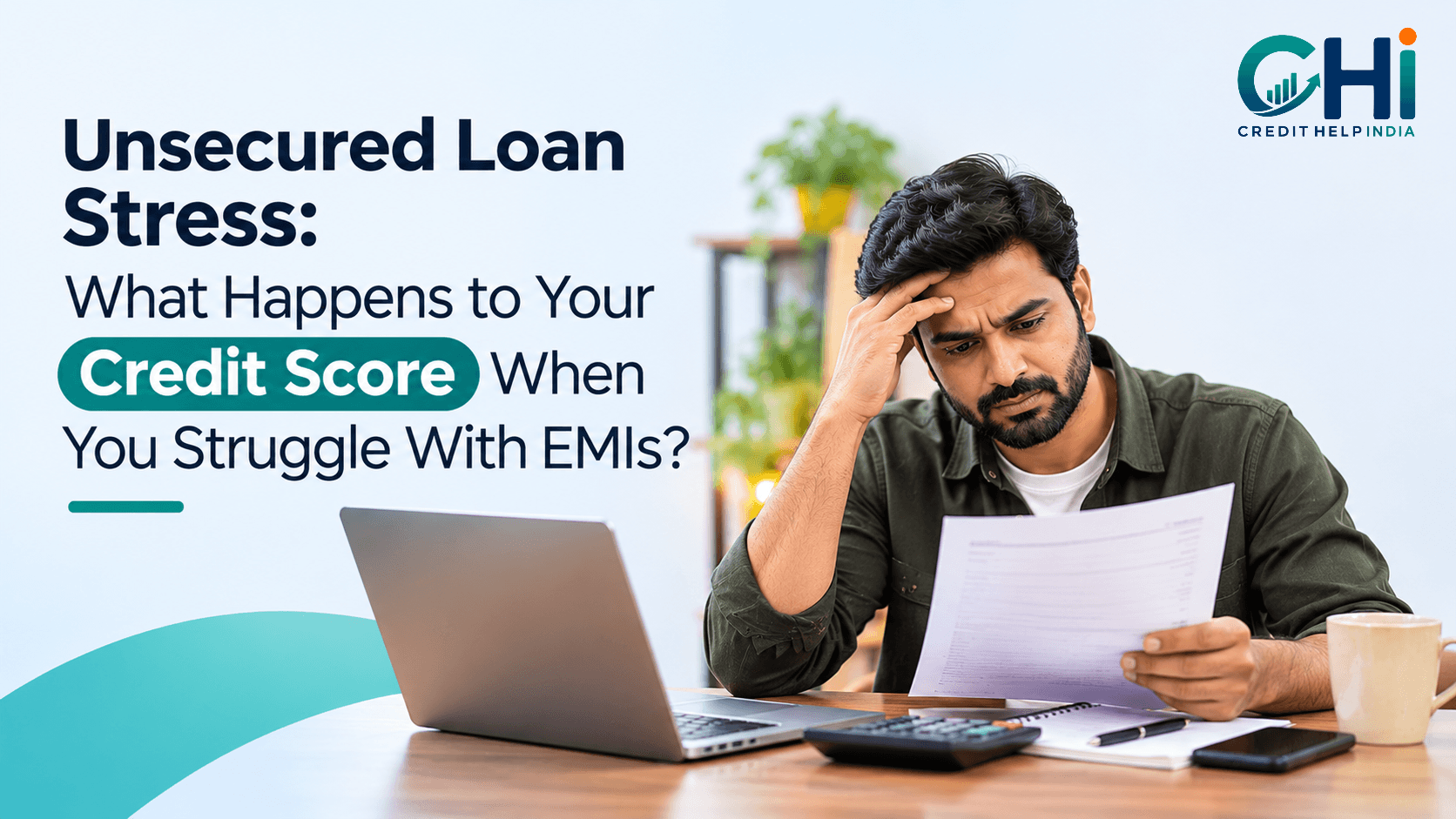
Unsecured loans such as personal loans do not require collateral, but they still create a repayment obligation. When you struggle with EMIs or miss payments, it can affect your credit score, credit report, and future borrowing options.
A missed EMI can negatively affect your credit score because payment history is an important part of your credit profile. If repayment problems continue, your credit report can also show overdue payments, which lenders may consider when assessing future loan applications.
The earlier you address EMI stress, the easier it can be to prevent a temporary cash-flow problem from becoming a larger credit issue.
How Do Missed EMIs Affect Your Credit Score?
Your credit score reflects your credit behaviour and ranges from 300 to 900. Payment history, credit utilisation, credit history and recent enquiries are among the factors that influence the score.
When you miss an EMI, the lender can report the delayed payment to the credit bureau. Continued delays can have a more significant impact on your credit score and credit report.
Your credit report may show the payment status and Days Past Due (DPD), helping lenders understand your repayment history.
This is why missing even a few payments should not be ignored.
What Happens to Your Credit Report When You Struggle With EMIs?
Your credit report contains information about your loans, credit cards, repayment history and credit enquiries.
If an EMI remains unpaid, the account may show an overdue amount or delayed payment status. This information can influence how lenders assess your creditworthiness when you apply for another loan or credit card.
Before taking additional credit, check your credit report and understand:
- Existing loan balances
- Overdue payments
- Repayment history
- Credit card utilisation
- Recent credit enquiries
A free credit report can help you understand what is currently being reported about your credit accounts.
What Should You Do Before Missing Another EMI?
If you know you may struggle with an upcoming EMI, act before the payment becomes overdue.
Start by calculating your total monthly debt obligations, including personal loans, credit cards and other EMIs. Compare these with your current income and essential expenses.
You should also speak with your lender to understand what options may be available under your loan agreement.
Avoid taking another loan simply to cover an existing EMI unless you have assessed the total cost and repayment burden. Additional borrowing can increase your overall debt rather than solve the underlying problem.
Can Loan Stress Lead to Personal Loan Rejection?
It can make future borrowing more difficult. When you apply for a personal loan, lenders may consider your credit score, repayment history, existing obligations, income and other eligibility criteria.
A history of missed payments can therefore become one of the potential personal loan rejection reasons.
There is no single minimum credit score that guarantees approval or rejection. Each lender has its own eligibility and risk assessment criteria.
If you are already struggling with EMIs, improving your existing credit behaviour should generally take priority over making multiple new loan applications.
How Can You Improve Your credit Score After Missed EMIs?
There is no instant way to improve your credit score after repayment problems.
Recovery depends on your credit behaviour over time.
Focus on:
- Clearing overdue payments
- Paying future EMIs on time
- Reducing high credit card utilisation
- Avoiding unnecessary credit applications
- Checking your credit report regularly
If your report contains inaccurate information, you can raise a dispute with the relevant lender or credit bureau.
This is different from genuine repayment problems. Accurate negative information cannot simply be removed because it is affecting your score.
What Is Credit Score Repair?
Credit score repair should not be viewed as an instant score-fixing process.
If your credit report contains errors, the appropriate step is to identify and dispute the inaccurate information. If the negative information is accurate, the focus should be on improving repayment behaviour and managing existing credit responsibly.
A credit score repair agency or credit advisory service may help you understand the report and the appropriate process, but no legitimate service can guarantee a specific score or remove accurate negative information.
FAQs
- Does missing an EMI affect your credit score?
Yes. A missed or delayed EMI can negatively affect your credit score because repayment history is an important part of your credit profile.
- Can I improve my credit score after missed payments?
You can work towards improving your credit profile by clearing overdue payments, making future payments on time, managing credit utilisation and avoiding unnecessary new credit applications.
- Can missed EMIs cause personal loan rejection?
Missed payments can be one of the factors lenders consider when assessing a personal loan application. However, loan decisions depend on multiple factors and lender-specific criteria.
- Can a credit report be corrected?
Yes, inaccurate information can be disputed. However, genuine repayment defaults cannot simply be removed from a credit report.
Conclusion
Unsecured loan stress can affect more than your monthly finances. Missed EMIs can impact your credit score and credit report, which may influence future borrowing decisions.
If you are struggling with repayments, act early. Review your debt, speak with your lender, check your credit report and avoid taking additional credit without understanding the repayment burden.
If you need to understand what is affecting your credit profile, you can explore Credit Help India's credit repair resources.
Frequently Asked Questions
CIBIL is a repository of information that collects and maintains the data provided by Banks and NBFCs, where individual have or had loans in the past. It has information about individual past and present repayment history and the status of individual loan accounts, personal information such as individual identity information, employment history, contact information, etc. It also keeps track of all the enquiries that individual has made for credit from various banks and financial institutions.
Get your credit fixed. Open doors to better
loans, cards, and rates.
Loan rejection, low score, no credit history or starting a new business we find what's wrong and fix it.