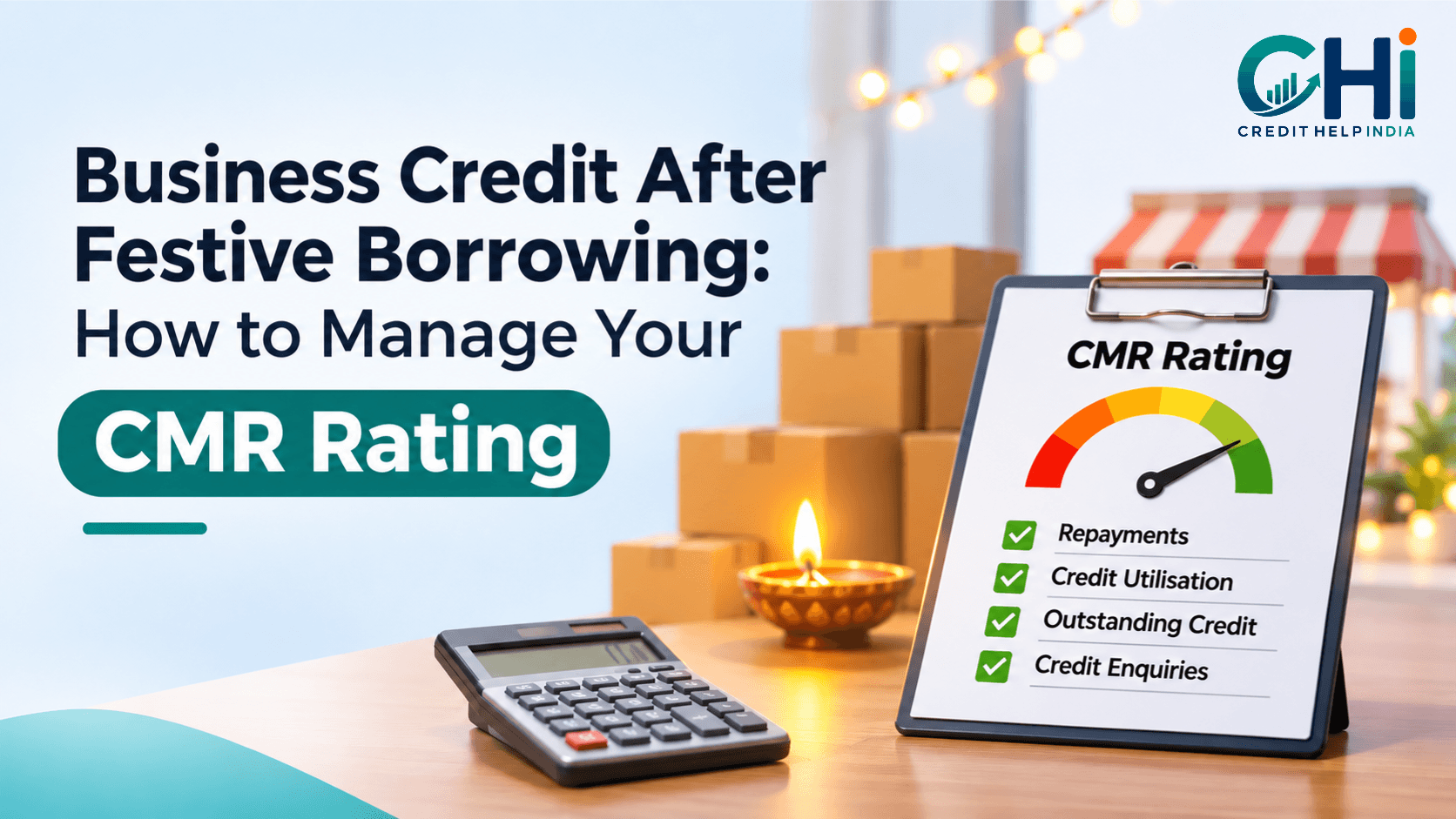
After Festive Season Business Spending: How Can It Affect Your CMR Rating?
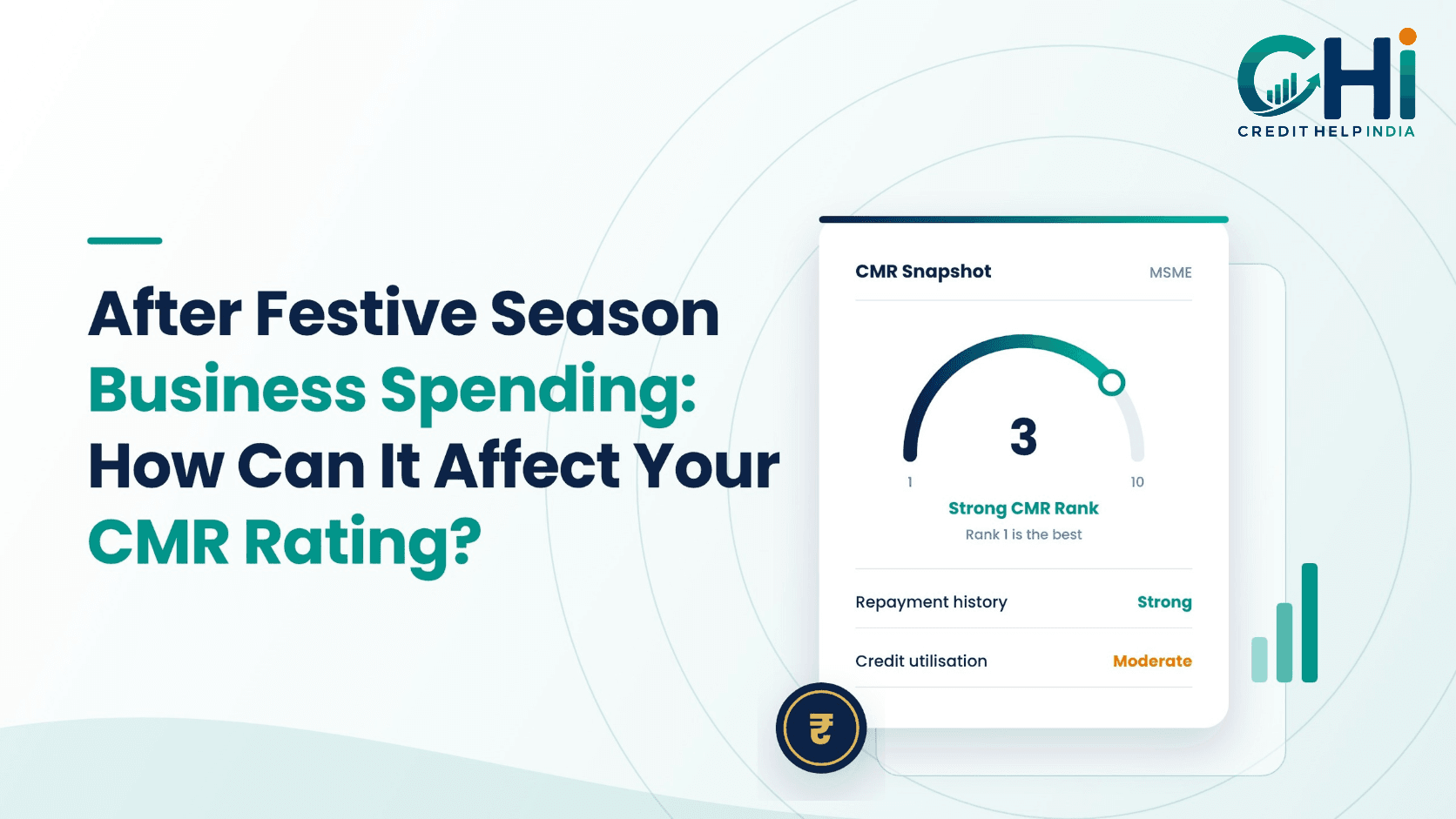
Festive-season demand can push MSMEs to increase inventory, place larger supplier orders, and use more working capital. But can higher business spending affect your CMR rating?
Festive spending or business borrowing does not automatically reduce your CMR rating. What matters is how the business manages its credit, particularly credit utilisation and repayment behaviour.
CMR, commonly discussed alongside CIBIL Rank and a company's credit report, helps lenders assess a business's credit profile.
Why Does Festive Spending Increase Business Borrowing?
For many MSMEs, festive demand creates a gap between spending and receiving revenue.
A retailer may need additional inventory before sales increase. A manufacturer may need more raw materials, while a wholesaler may need additional working capital to fulfil larger orders.
Businesses may therefore use business loans or working-capital facilities to manage these requirements.
The key consideration is whether the additional business credit matches the expected cash flow and repayment capacity.
Does Business Borrowing Affect Your CMR Rating?
Taking a business loan does not automatically mean your CMR rating will fall. CIBIL identifies past repayment behaviour and credit utilisation as major parameters used to calculate CIBIL Rank.
This means an MSME can borrow during the festive season while maintaining a healthy business credit score if it manages its repayments and outstanding credit responsibly.
Problems can arise when higher borrowing is accompanied by delayed repayments, excessive utilisation or repeated applications for additional credit.
How Does Credit Utilisation Affect the CMR Score?
Credit utilisation refers to how much of the available credit a business is using. For example, an MSME with a ₹50 lakh working-capital limit that regularly uses most of that facility is relying more heavily on available credit than a business using a smaller portion.
Credit utilisation is one of the parameters considered in CIBIL Rank.
After the festive season, businesses should therefore review whether their outstanding credit is reducing as inventory is sold and customer payments are collected.
If borrowing remains high because sales or collections have not met expectations, the business should reassess its cash flow before taking additional credit.
Why Does Repayment Behaviour Matter for CMR Rank?
Repayment behaviour is an important part of a company's credit profile.
A business may borrow more during the festive season without damaging its CMR, provided it continues to meet its repayment obligations.
MSMEs should therefore track:
- Business loan repayments
- Working-capital obligations
- Interest payments
- Outstanding supplier payments
- Receivables and expected cash inflows
Delayed repayments can affect the company's credit report and may influence how lenders assess future business loan applications.
Can Multiple Loan Applications Affect Business Credit?
They can result in multiple credit enquiries.
When an MSME applies for a business loan, the lender may access its business credit report or company credit report. If a business applies to several lenders within a short period, multiple enquiries may appear in its credit history.
This does not automatically mean that the business has a poor CMR score. However, frequent applications can indicate increased demand for credit and may be viewed cautiously by lenders.
Businesses should therefore determine their actual funding requirement before applying for additional credit.
How Can MSMEs Manage Their CMR After Festive Spending?
A post-festive CMR rating check can help businesses understand their current credit position.
MSMEs should:
- Review outstanding credit: Understand how much remains across business loans and working-capital facilities.
- Monitor credit utilisation: Check whether borrowing remains high after the temporary festive requirement has passed. - Prioritise repayments: Make scheduled repayments on time and avoid unnecessary delays.
- Limit unnecessary applications: Apply for additional business credit only when there is a genuine requirement.
- Review the business credit report: Check credit accounts, repayment information and enquiries for accuracy.
Should an MSME Take Another Business Loan After the Festive Season?
There is no universal answer.
Before taking another business loan in India, consider whether additional funding is genuinely required, how much existing credit remains outstanding and whether expected cash flow can support another repayment obligation.
If festive sales met expectations and receivables are coming in as planned, the business may be in a stronger position to manage existing borrowing.
If inventory remains unsold or collections are delayed, additional borrowing could increase financial pressure.
Understanding the credit score required for a business loan is only one part of the decision. Lenders may also consider repayment history, existing debt, business performance and their own eligibility criteria.
FAQs
- Does festive spending affect the CMR rating?
Festive spending does not automatically reduce CMR. Credit utilisation and repayment behaviour are more important considerations.
- Does business borrowing affect the CMR score?
Borrowing itself does not automatically reduce the CMR score. How the business manages its credit and repayments is important.
- Does high credit utilisation affect CMR rank?
Yes. Credit utilisation is one of the major parameters considered in CIBIL Rank.
- Can multiple business loan applications affect business credit?
Multiple applications can create credit enquiries. Businesses should assess their funding requirements before applying to multiple lenders.
- How can an MSME maintain a healthy CMR rating?
Timely repayments, controlled credit utilisation, limited unnecessary borrowing, and regular business credit report reviews can help MSMEs manage their credit profile.
If your business is planning additional borrowing, you can review your business credit position before taking on additional credit.
Frequently Asked Questions
CIBIL is a repository of information that collects and maintains the data provided by Banks and NBFCs, where individual have or had loans in the past. It has information about individual past and present repayment history and the status of individual loan accounts, personal information such as individual identity information, employment history, contact information, etc. It also keeps track of all the enquiries that individual has made for credit from various banks and financial institutions.
Get your credit fixed. Open doors to better
loans, cards, and rates.
Loan rejection, low score, no credit history or starting a new business we find what's wrong and fix it.