WHAT ARE THE DIFFERENT TYPES OF CREDIT SCORES?
When people talk about credit scores, they frequently assume you just have one. However, the truth is that you have numerous credit scores.
Your FICO® Score and VantageScore® are the primary credit scores utilised by the three major credit bureaus — Experian, Equifax, and TransUnion. We explain why you have multiple credit scores and deconstruct the distinctions between them.
Credit scoring models
Your FICO Score and VantageScore are both used to determine how financially stable you are and how likely you are to repay loans. Here's a quick rundown of each one.
What is a FICO Score?
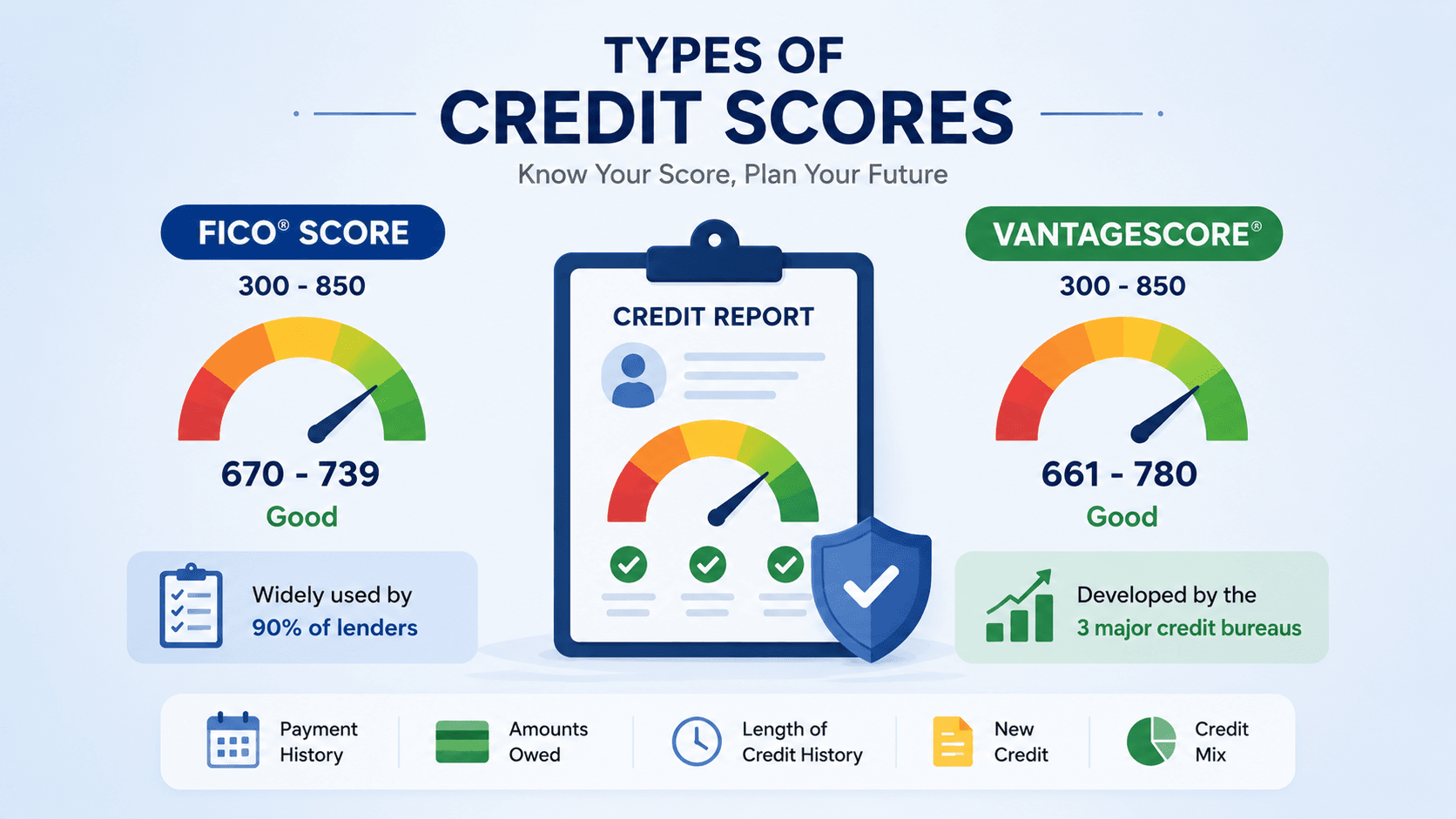
Your FICO Score, founded by Fair Isaac Corporation, is utilised in 90% of all lending decisions, and it was only recently made available to consumers in 1989. It has been around since 1956, but it was only recently made available to consumers in 1989. The three-digit number is usually between 300 and 850. A credit score of 670 to 739, according to FICO, is considered good and can help you get cheaper interest rates on your mortgage, auto loan, or any other form of loan.
The following ranges are used by FICO to determine your credit score:
| Credit ratings | Credit scores | Impact on applicant |
| Poor credit | 300 to 579 | May be required to pay a fee or deposit, or may not be approved for credit at all. |
| Fair credit | 580 to 669 | Considered a subprime borrower who may have difficulty repaying debt. |
| Good credit | 670 to 739 | Not considered likely to become seriously delinquent in the future. |
| Very good credit | 740 to 799 | Likely to receive better than average rates from lenders. |
| Exceptional credit | 800 to 850 | Likely to receive the best rates from lenders. |
The five factors that determine your FICO Score and how much each factor is weighted are:
1. Payment history (35%):
This measures on-time payments.
2. Amounts owed (30%):
This measures how much debt you’re carrying relative to your credit limits.
3. Length of credit history (15%):
This measures how long you’ve been handling credit.
4. New credit (10%):
This measures how often you apply for new credit.
5. Credit mix (10%):
This measures how you handle different types of credit, such as credit cards and loans.
What is a VantageScore?
The VantageScore was created in 2006 by the three main credit bureaus as a replacement for the FICO Score in order to better reflect changes in behavioural trends and breakthroughs in data collection.
The VantageScore's most recent versions (3.0 and 4.0) now have the same range as the FICO Score (300 to 850). Whereas a FICO Score can take up to six months of credit activity to generate, a VantageScore simply requires one month of credit history.
VantageScore ranges are as follow:
| Credit ratings | Credit scores | Impact on applicant |
| Very poor credit | 300 to 499 | Not likely to be approved for credit. |
| Poor credit | 500 to 600 | May be approved for some credit, though interest rates may be high and larger down payments may be required. |
| Fair credit | 601 to 660 | May be approved for credit without competitive rates. |
| Good credit | 661 to 780 | Likely to be approved for credit with competitive rates. |
| Excellent credit | 781 to 850 | Most likely to receive favorable rates and terms on credit accounts. |
While payment history is taken into account by both the FICO Score and the VantageScore, the VantageScore places a greater focus on other criteria such as credit age and utilisation. Your VantageScore is determined by the following factors:
- Total credit usage, balance and available credit (Extremely influential)
- Credit mix and experience (Highly influential)
- Payment history (Moderately influential)
- Age of credit history (Less influential)
- New accounts (Less influential)
Other types of credit scores
While FICO and VantageScore are the two most often used credit ratings by lenders, they aren't the only ones. Many large lenders employ bespoke scoring models developed by in-house statisticians or third-party vendors.
FICO, for example, creates 49 separate credit ratings for lenders, each concentrating on different lending criteria for a range of financial institutions in the US. The Generic FICO Score, FICO Mortgage Score, FICO Auto Score, FICO Bankcard Score, FICO Installment Loan SCORE, and FICO Personal Finance Score are the six major FICO scores.
Frequently Asked Questions
CIBIL is a repository of information that collects and maintains the data provided by Banks and NBFCs, where individual have or had loans in the past. It has information about individual past and present repayment history and the status of individual loan accounts, personal information such as individual identity information, employment history, contact information, etc. It also keeps track of all the enquiries that individual has made for credit from various banks and financial institutions.
Get your credit fixed. Open doors to better
loans, cards, and rates.
Loan rejection, low score, no credit history or starting a new business we find what's wrong and fix it.